

Why International Students Need Extra Academic Support.
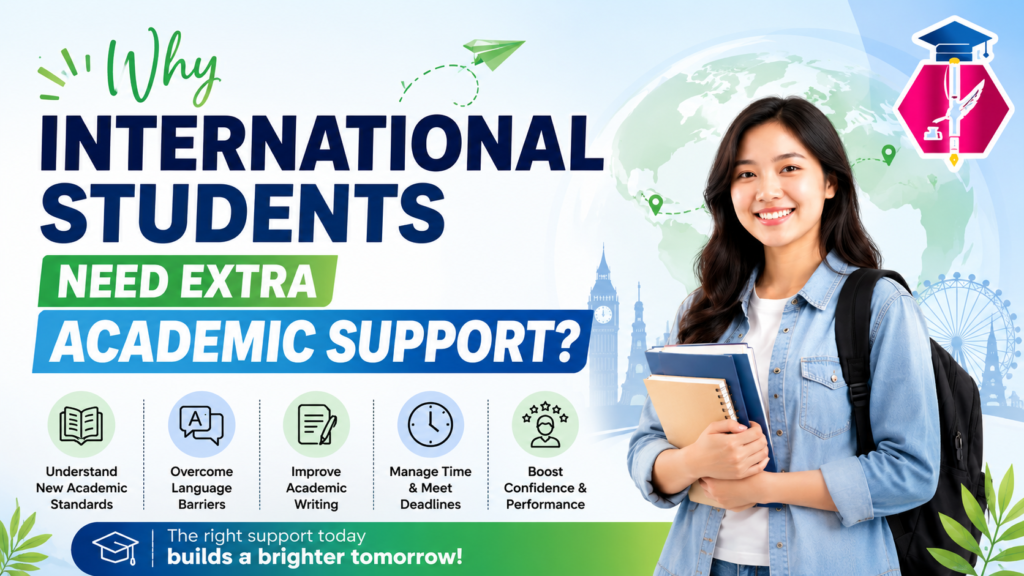
Why International Students Need Extra Academic Support. A dream of millions of students around the world is to study abroad. Students fly thousands of miles each year to pursue their studies in other countries, with a view to gaining a broader educational experience and exposure to the global world, and a better future. Learning in another country can be an exciting, rewarding and life-changing experience. It enables students to explore new ideas, learn to be independent and learn new skills that they will be able to use to be successful in their careers. Although there are numerous advantages to studying abroad, it also presents one or two challenges. There are various barriers that international students may encounter that are not faced by domestic students. International students face a myriad of challenges as they adjust to a new education system, language barriers and cultural differences – a complex academic landscape and an unfamiliar way of life. That’s why additional academic support is so significant in supporting international students’ success. Academic support does not mean that we provide “shortcuts” or complete the student’s work. Rather, it offers guidance, resources and assistance that enable students to understand expectations, enhance their skills, and do their best.
The challenge whilst adapting to a new education system.
The adjustment to a different education system is one of the greatest challenges for students from abroad. The approach to teaching and learning, as well as the ways of assessing and the desired learning outcomes, vary from country to country. By way of example, assignments elsewhere may take a totally different form to that in the student’s home country. Critical thinking, independent research and academic writing are sometimes given high priority in universities of countries like the United Kingdom, Australia, Canada and the United States. These expectations aren’t well-known by many international students when they first come. They may have a lot of knowledge on a particular topic, but have a problem communicating in a format demanded by their school. Academic support assists students with understanding these expectations and equips them with the skills necessary to successfully meet these expectations.
The use of a different language can impact a student’s learning.
Even the students who have a good knowledge of English may face problems while studying in an English-speaking country. Academic language can be more complicated than conversational language. Students can comprehend and be able to participate in classroom conversations, but may struggle when writing in formal academic language, including essays, research papers, and reports. It can also be difficult to understand technical terminology, academic terminology and requirements for referencing. Sometimes students may not be able to present their knowledge and ideas fully due to the language barrier. Consequently, they may not be as successful academically as they are in the subject. Academic support helps to fill this gap and guides students on grammar, structure, clarity and academic writing conventions. Students can express themselves better and have more confidence with the appropriate support. Ways to facilitate the learning environment for diverse cultures.How to support cultural differences in the classroom. The teaching approach is affected by culture, and there are huge differences between countries. In some schools, students are taught to learn by rote and to learn in a step-by-step manner. In others, students are asked to challenge and critique ideas, to engage in discussion and to form their own arguments. It can be confusing for international students when they have to navigate these cultural differences. They might not be sure how to be involved in class, work in a group, or even how to do a class assignment. Academic support assists students in gaining an understanding of these differences and makes the transition to their new learning environment more comfortable. It offers direction in the expectations for academics and assists students in feeling comfortable being active in their learning.
How to deal with Academic Stress.
Going to university abroad can be a big monetary commitment. Many international students and their families make a lot of sacrifices to get their education. This can cause students to grow anxious about securing top marks, and they have to explain why the effort being put into their education is worth it. Meanwhile, they are taking courses, facing deadlines, holding down a part-time job, etc., and taking care of themselves. This stress can sometimes cause stress and anxiety that can impact student performance and well-being. Academic assistance can help alleviate this stress by helping students to be organised, understand what is required of them and distribute their work between assignments. Providing students with guidance and resources allows them to confidently face academic challenges. To understand what Academic Integrity means and to know how to reference. A lot of foreign students don’t know the academic integrity policies of their new university or college. Plagiarism, referencing and style of citation could be different from those they have encountered in their own countries.
It is a fact that any errors, regardless of whether they are accidental or intentional, can have significant repercussions in the classroom. Students may unwittingly infringe on university guidelines by not following the proper citation guidelines. Academic support encourages and teaches students about the value of academic integrity and proper citation of sources. These skills will enable students not only to avoid penalties and sanctions for their academic work but also to enhance their research and writing skills. In this course, students will develop the confidence to write academic papers. One of the most important skills that students must acquire in order to do well at university is academic writing. It can also be one of the most challenging aspects for international students. Students will be asked to structure ideas, present evidence, and adhere to certain formatting requirements in their writing assignments.
This may be difficult for language learners who are writing in a second language. Students will be able to develop their writing skills progressively and with confidence, given extra support. They are taught to organise their essays, formulate arguments, interpret evidence and articulate their thoughts better. As students’ writing develops, they are likely to feel more confident in their academic writing and career prospects.
Achieving a balance between study and everyday life.
When you relocate to a new country, there’s so much more to it than attending classes. International students have to learn to cope with a different culture, budget, housing, socialising, and possibly taking on part-time employment. These duties may challenge maintaining a balanced life. A healthy balance between school and personal life can be challenging due to these responsibilities.
A lot of students are often overwhelmed with competing priorities, particularly during exam periods or when there are several assignments due. Academic support will assist students to plan their time better, prioritise their tasks and keep them on track with their work. This guidance will enable learners to enjoy a more balanced and healthy lifestyle whilst learning.
Supporting students’ long-term academic progress.
Academic support is not just about assisting students with completing single assignments. Its real impact is in helping students to build skills that will help them throughout their studies and into the future. Students who are given information on how to conduct Research, how to write, how to think, and how to manage their time become better independent learners. These skills are not only relevant to the post-education world but also after it, too. Graduates are consistently expected to be able to communicate effectively, to be able to solve problems, to be able to research, and to think critically. Academic assistance enables pupils to develop these qualities and equips them for their future successes in the workplace.
It’s time to make decisions to create equal opportunities for success! Each international student has unique perspectives, experiences and talents to bring to universities around the world. They enhance learning in the classroom, serve as a source for research, and are a part of the development of globally connected learning spaces. But talent and opportunity are not necessarily equal. Pupils who are settling into a new country and education system might experience further challenges that impact their achievement. Extra academic assistance equates to a level playing field.
It eliminates language, culture and/or differing expectations in academia as barriers to the evaluation of a student’s knowledge and abilities. Educational institutions can support international students to reach their full potential by providing appropriate support.
Academic Support has a Positive Impact.
With the right help, international students’ experiences have a positive impact well beyond the classroom. Pupils gain confidence in their skills. Involved in class discussions more. They become more effective in their ability to communicate and do research work. They feel more attached to their academic community and better equipped for future career opportunities.
Academic support enables pupils to overcome obstacles and maximise their learning. It makes challenges learning opportunities and enables students to reach goals they might not have thought were possible.
Conclusion.
Going abroad is an exhilarating and fulfilling experience, but with it comes academic challenges as well. International students need to adjust to new education systems, find it difficult in other language environments, face other cultural expectations, and experience a high level of academic stress. Extra academic support is there to offer guidance, resources and encouragement to overcome these challenges. It enhances student skills, boosts students’ self-confidence and helps them reach their academic objectives while keeping academic integrity and personal well-being in mind.
When it comes to academic success, asking for help is a good sign of intelligence and not weakness. All students must have an opportunity to succeed, and for international students, when they are given the opportunity, they can maximise their learning experience abroad and realise their potential. Making the move to studying in a new country can sometimes be difficult, but with the right guidance and support, it might be one of the most rewarding experiences of a student’s life.