

How to Register with a GP in the UK: A Guide for Indian Students
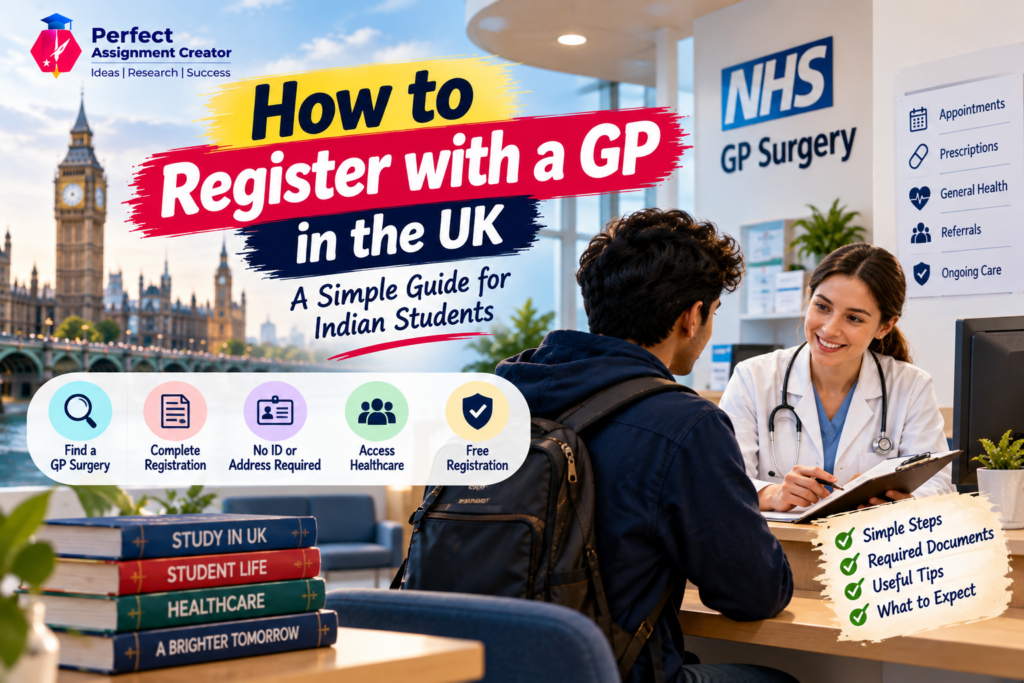
Moving to the UK for university involves much more than arranging accommodation and attending your first lecture.
You also need to understand how everyday services work—including healthcare.
One of the first things Indian students should consider after arriving in the UK is learning how to register with a GP near their university or home.
A GP, or General Practitioner, is usually your first point of contact for many everyday health concerns in the NHS. NHS guidance specifically recommends that students register with a local GP, particularly when they spend most of the year at their university address. Check further details here.
The process is generally straightforward, and in England, GP registration is free.
What Is a GP?
A GP is a doctor or healthcare professional who provides primary healthcare.
You may contact a GP for things such as:
- General health concerns
- Ongoing health problems
- Prescriptions
- Referrals to specialist services
- Preventive healthcare
- Advice about certain symptoms
Think of your GP as the first stop for many non-emergency health needs.
Your healthcare journey
Health concern
      ↓
     GP
      ↓
Advice / Treatment
      ↓
Referral if needed
      ↓
Specialist / Hospital
For emergencies, however, you should use the appropriate emergency services rather than waiting for a GP appointment.
Why Should International Students Register with a GP?
You may think:
“I’m healthy, so I don’t need to register yet.”
It’s still useful to register with a GP before you actually need medical care.
NHS guidance advises students to register with a GP near their university so they can access healthcare more easily when needed. This can be particularly useful if you have an ongoing condition or regularly need medicines.
For an Indian student adjusting to a new country, having a registered GP can also make navigating the UK healthcare system less stressful.
How to Register with a GP in the UK
The process in England is relatively simple.
Step 1: Find a GP Surgery
Use the NHS Find a GP service and search using the postcode where you live.
You can also check your university’s website to see whether it has a student health centre or recommended local GP practices.
What should you look for?
Consider:
| Factor | Why it matters |
|---|---|
| 📍 Location | Easier to attend appointments |
| 🕐 Opening hours | Useful around your class schedule |
| 💻 Online services | Convenient for registration and requests |
| 🎓 Student experience | Some university practices regularly serve students |
| 🏠 Catchment area | Some surgeries have geographical requirements |
NHS guidance notes that most people will need to register near where they live, although some practices accept patients from outside their usual area.
Step 2: Complete the Registration Form
Many GP surgeries allow you to register online.
You can also register by completing a paper form at the surgery or, where available, using the practice’s own website. The NHS online registration process generally takes around 15 minutes per person.
You’ll normally provide basic information such as:
- Full name
- Date of birth
- Address
- Emergency contact details
- Previous GP details, if applicable
What Documents Do You Need to Register with a GP?
This is where many international students become unnecessarily worried.
In England, you do not need ID, proof of address or proof of immigration status to register with a GP. You also do not need an NHS number.
Quick reference
| Document | Required to register? |
|---|---|
| Passport/ID | ❌ Not required |
| Proof of address | ❌ Not required |
| Immigration documents | ❌ Not required |
| NHS number | ❌ Not required |
| Basic personal details | ✅ Yes |
A surgery may ask for additional information for administrative reasons, such as helping transfer medical records, but lack of these documents should not normally prevent registration.
Can International Students Register with a GP?
Yes.
NHS England guidance states that people in England—including students, people on work visas and overseas visitors—can register with a GP practice. There is no minimum length of residence required for eligibility for NHS primary medical services.
This is especially relevant for Indian students arriving in the UK for university.
Your immigration status should not be used as a reason to refuse GP registration.
However, GP registration and entitlement to every NHS service are not the same thing. Access to hospital and other secondary-care services can involve separate eligibility or charging rules.
What If You Don’t Have a Permanent Address?
Don’t panic.
NHS guidance says that if you do not have a permanent address, you can register using a temporary address or, in certain circumstances, the GP surgery’s address.
This can be useful for students who have just arrived in the UK and are temporarily staying in:
- University accommodation
- Temporary housing
- Short-term accommodation
Once your permanent address is confirmed, you can update your details with the GP.
Can You Register as a Temporary Patient?
Yes.
If you are staying somewhere for more than 24 hours but less than 3 months, you can register as a temporary patient.
This can be useful when you’re away from your usual GP for a short period. NHS guidance says temporary registration can last up to three months, after which you can reapply or register permanently.
For students who will be living near their university for most of the academic year, permanent registration is usually the more relevant option.
What Happens After You Register?
Once the surgery processes your registration, you should be told that you have been registered.
NHS guidance says registration will usually happen within five days of the surgery receiving your details, although it can take longer.
Some online GP registration systems also allow practices to process registration electronically.
Your simple GP registration journey
Find local GP
      ↓
Check eligibility/catchment
      ↓
Complete registration
      ↓
Submit details
      ↓
GP confirms registration
      ↓
Keep the practice details
What If a GP Surgery Refuses to Register You?
A GP surgery can refuse registration in certain circumstances, such as when it is not accepting new patients or when you live outside its area.
However, the NHS states that if a surgery refuses your registration, it must provide a written explanation within 14 days.
If you’re having difficulty registering, NHS guidance suggests contacting your local Integrated Care Board (ICB), Citizens Advice or Healthwatch for help.
GP Registration Checklist for Indian Students
Before or shortly after arriving at your UK university:
☐ Find a GP near your accommodation
☐ Check whether your university has a student health centre
☐ Complete the registration form
☐ Keep your GP’s contact details
☐ Save your NHS number if you already have one
☐ Find out how the surgery handles appointments
☐ Learn when to use NHS 111 or emergency services
☐ Register before you urgently need healthcare
Final Thoughts
Learning how to register with a GP is one of those small things that can make settling into life in the UK easier.
For Indian students, the process may initially seem unfamiliar, but in England it is free and does not require a passport, proof of address or immigration-status documents simply to register.
The best approach is to find a convenient GP near your university or accommodation and register early rather than waiting until you become unwell.
Your university journey is about more than lectures, assignments and exams.
Knowing how everyday services work can help you feel more prepared for life abroad.
Arrive prepared. Register early. Know where to get help.
This guide focuses on GP registration in England, based on current NHS guidance. Healthcare arrangements and specific procedures can differ elsewhere in the UK, so students should check the relevant NHS service for Scotland, Wales or Northern Ireland where applicable.
Read our previous blog here!