

How to Survive Your First Winter in the UK: A Student Guide
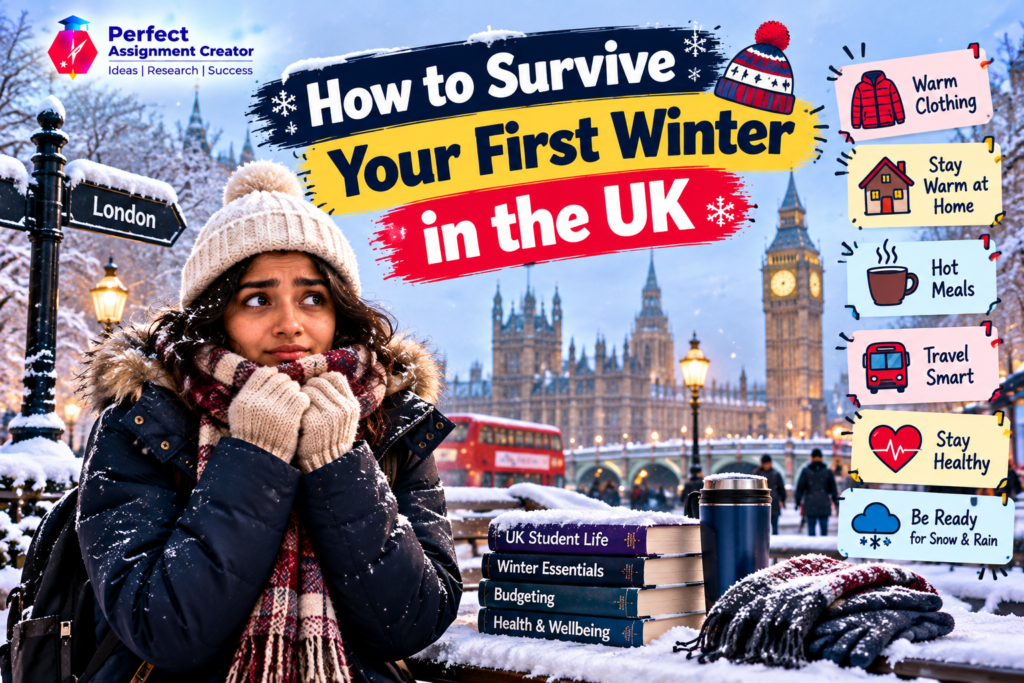
Your first winter in the UK can be a big adjustment.
If you’re coming from India, especially from a warmer part of the country, the combination of cold temperatures, shorter days, wind and frequent wet weather may feel very different from what you’re used to.
The good news?
You don’t need to spend a fortune or completely change your lifestyle.
With the right clothes, a sensible routine and a little preparation, your first winter can actually become an enjoyable part of your student experience.
UK winter is typically from December to February and is generally the coldest season, with shorter days and a mix of wet, windy, frosty and sometimes snowy conditions. Met Office
What Is UK Winter Actually Like?
Many international students arrive expecting snow everywhere.
That’s not necessarily what you’ll get.
In many parts of the UK, winter can be more about cold rain, wind, damp weather and limited daylight than heavy snow. Conditions also vary significantly depending on where you live; northern and inland areas can be colder than southern and coastal locations. Met Office
Think of UK winter like this:
| You may experience | What it means |
|---|---|
| 🌧️ Rain | Waterproof clothing matters |
| 💨 Wind | A good outer layer helps |
| 🧊 Frost | Roads and paths can become slippery |
| ❄️ Snow | Possible, but not guaranteed |
| 🌇 Shorter days | Plan outdoor activities carefully |
1. Don’t Buy 10 Thick Jackets
One of the biggest mistakes students make during their first winter is buying lots of heavy clothing without understanding what they actually need.
Layering is usually more practical.
A useful winter clothing system
Base layer
     ↓
Warm jumper / fleece
     ↓
Waterproof or wind-resistant jacket
     ↓
Scarf + gloves + hat
     ↓
Warm, waterproof footwear
Several layers can be more useful than one extremely thick coat because you can add or remove layers depending on the weather.
NHS winter guidance also recommends wearing several thinner layers rather than relying on one thick layer. NHS England
Your winter essentials
✅ Warm coat
✅ Waterproof jacket or outer layer
✅ Sweaters/fleeces
✅ Gloves
✅ Scarf
✅ Warm socks
✅ Comfortable waterproof shoes or boots
✅ Compact umbrella
You don’t need designer brands. Warmth, comfort and practicality matter more.
2. Prepare Your Room for Cold Weather
Your room can make a huge difference to your first winter experience.
Before winter becomes severe, learn how your heating system works.
Find out:
- How to turn the heating on
- How to adjust the thermostat
- Whether heating is included in your rent
- Whether your accommodation has set heating hours
- Who to contact if the heating stops working
The Met Office and UK health guidance recommend keeping regularly used rooms at around 18°C or above where possible, particularly during cold periods. Met Office
Don’t wait until you’re freezing to discover that you don’t know how your heating works.
3. Learn to Deal With Rain, Not Just Cold
For many students, the biggest surprise isn’t the temperature.
It’s the rain.
A waterproof outer layer can be more useful than carrying a huge winter coat every day.
Student rule:
Cold + dry → focus on layers
Cold + rain → layers + waterproof protection
Cold + wind → good outer layer + scarf
Check the forecast before leaving for university rather than assuming the morning’s weather will continue all day.
4. Get Used to the Shorter Days
One of the biggest differences during your first winter can be the amount of daylight.
The UK winter solstice has the shortest day of the year, and winter generally brings much shorter daylight hours than summer. Met Office
You may leave for university when it is dark and return when it is already getting dark.
This can make it tempting to stay inside all day.
Try to maintain a routine:
☀️ Get outside during daylight when possible
🚶 Walk to university or around campus
🏋️ Keep exercising
👥 Meet friends instead of isolating yourself
📚 Use libraries and university spaces to maintain your routine
You don’t need to spend the entire winter indoors.
5. Don’t Let Heating Destroy Your Budget
Winter can also affect your student finances.
Heating, warm clothing and extra transport costs can increase your spending.
Before winter starts, review your budget.
| Winter expense | Plan ahead |
|---|---|
| Heating | Understand your accommodation arrangement |
| Clothing | Buy essentials before extreme cold |
| Transport | Allow for delays or extra journeys |
| Food | Plan affordable hot meals |
| Emergency costs | Keep some savings available |
Avoid leaving heating on unnecessarily when you’re away, but don’t make yourself uncomfortably cold just to save money.
6. Eat Properly and Stay Hydrated
When the weather is cold, it can be tempting to survive on snacks and instant noodles.
Don’t.
Regular meals and hot drinks can help you stay comfortable, while eating properly also supports your normal study routine.
The Met Office recommends eating regularly, having at least one hot meal a day and having regular hot drinks during cold weather. Met Office
Easy student-friendly winter foods
🍲 Soup
🍛 Rice and curry
🥣 Oatmeal
🍝 Pasta
🍳 Eggs
🍵 Tea or other hot drinks
You don’t need expensive “winter foods.”
Just eat regular, balanced meals.
7. Be Careful When Walking in Frost or Snow
Not every winter day will involve snow, but icy conditions can occur.
Slips and falls are one of the risks associated with winter weather, and snow or ice can also affect transport. Met Office
When conditions look slippery:
- Walk more slowly
- Wear shoes with good grip
- Leave earlier
- Check university or transport updates
- Avoid unnecessary travel during severe conditions
A 10-minute delay is better than a preventable injury.
8. Keep an Eye on Weather Warnings
Don’t rely only on what you see outside your window.
UK weather can change quickly.
Before travelling, particularly during severe weather, check the Met Office forecast and warnings for your area. Official guidance recommends keeping up to date with warnings because snow, ice, wind and storms can cause disruption. Met Office
Simple routine
Check forecast
      ↓
Check travel
      ↓
Choose clothing
      ↓
Leave earlier
      ↓
Stay safe
9. Don’t Isolate Yourself
Your first winter is not just a physical adjustment.
Being away from home during cold, dark days can make student life feel very different.
Keep your normal social routine where possible.
Join university societies, meet friends, exercise, attend events and use campus facilities.
And if you’re struggling emotionally or finding student life difficult, remember that universities usually have student-support services you can approach.
You don’t have to deal with everything alone.
Your First Winter Checklist
Before winter arrives, make sure you have:
☐ Warm coat
☐ Waterproof footwear
☐ Gloves and scarf
☐ Heating information
☐ Basic winter medicines and essentials
☐ A small emergency budget
☐ Weather app/bookmarked forecast
☐ Indoor and outdoor exercise plan
☐ University support contacts
☐ A routine for shorter daylight hours
Final Thoughts
Your first winter in the UK may feel strange at first, particularly if you’re coming from a warmer climate.
But you don’t need to fear it.
Prepare your clothing, understand your heating, budget for seasonal expenses, check the weather and maintain your normal routine.
And remember that UK winter isn’t always about snow and freezing temperatures. In many places, rain, wind, damp conditions and shorter daylight are just as important to prepare for. Met Office
The secret is simple:
Layer well, plan ahead, stay active and don’t let the weather stop you from enjoying student life.
Your first winter might be an adjustment—but by the time spring arrives, you’ll probably wonder why you were so worried about it.